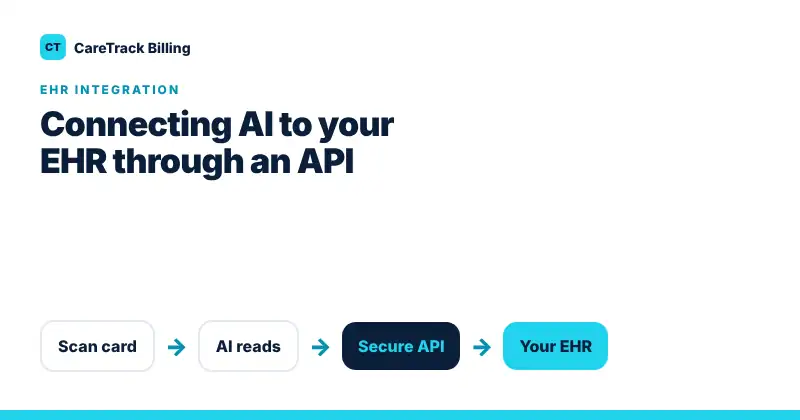
AI is only useful if its results end up where your team works: the EHR or practice management system. An API (application programming interface) is the secure connection that makes this happen without anyone copying data between screens.
How the Data Flows
- The front desk scans the intake form and insurance card.
- AI extracts the fields and eligibility is verified.
- The verified record is sent to your EHR through the API.
- Your EHR confirms the update, and the patient chart is ready for the visit.
What Is an API Key?
An API key works like a password for software. It proves that a request comes from an approved system. Good practice is simple: keep keys on the server (never in a web page or email), give each key only the permissions it needs, and replace a key right away if it is ever exposed.
Security Questions to Ask Any Vendor
- Will you sign a Business Associate Agreement (BAA)?
- Is data encrypted in transit and at rest?
- Who can access patient data, and is access logged?
- Is only the minimum necessary information shared?
- What happens to our data if we stop working together?
What If Our EHR Has No API?
Many EHRs offer APIs or standard interfaces, but not all of them. When a direct connection is not available, our team works inside your existing system, so you still get the benefit of AI-captured and verified data.
See which systems we work with on our EHR integrations page, or book a free demo to talk about your setup.